

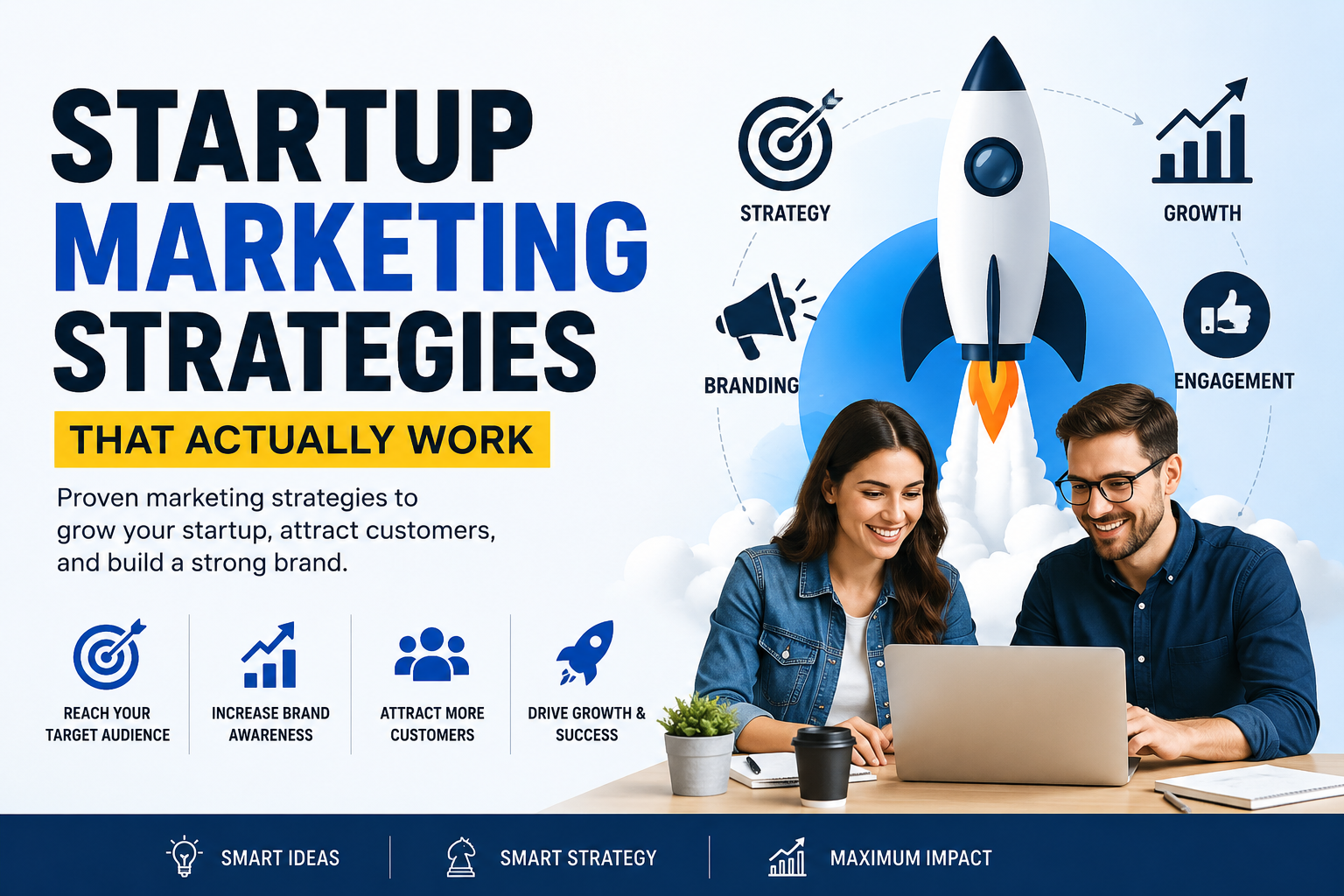
Starting a new business is exciting, but attracting customers can be challenging. Many startups struggle because they focus only on building their product and forget about marketing. Even the best product needs the right marketing strategy to reach potential customers.
The good news is that startup marketing does not always require a huge budget. With the right approach, startups can build brand awareness, attract customers, and grow their business effectively. In this guide, we will explore startup marketing strategies that actually work and can help your business succeed.
Why Marketing Is Important for Startups
Marketing helps people discover your business and understand the value of your products or services. Without marketing, even a great startup may remain unnoticed.
Effective marketing can help startups:
- Increase brand awareness
- Generate leads and sales
- Build customer trust
- Stand out from competitors
- Create long-term business growth
A strong marketing strategy allows startups to connect with the right audience and turn potential customers into loyal buyers.
Understand Your Target Audience
Before starting any marketing campaign, it is important to know who your customers are.
Ask yourself:
- Who needs your product or service?
- What problems do they face?
- Where do they spend their time online?
- What type of content do they enjoy?
Creating customer personas can help you better understand your audience. The more you know about your customers, the easier it becomes to create marketing campaigns that attract them.
Build a Professional Website
Your website is often the first impression people have of your startup. A professional and user-friendly website builds trust and helps convert visitors into customers.
Your website should include:
- Clear information about your business
- Product or service details
- Contact information
- Customer testimonials
- Fast loading speed
- Mobile-friendly design
A well-designed website serves as the foundation of your digital marketing efforts.
Focus on Search Engine Optimization (SEO)
SEO helps your website appear in search engine results when people look for products or services related to your business.
Some simple SEO tips include:
- Use relevant keywords in your content
- Create helpful blog posts
- Optimize page titles and descriptions
- Improve website speed
- Build quality backlinks
SEO is a long-term strategy, but it can generate consistent organic traffic without spending money on advertisements.
Use Content Marketing
Content marketing is one of the most effective ways for startups to attract customers.
Create valuable content such as:
- Blog articles
- How-to guides
- Industry insights
- Case studies
- Infographics
- Videos
Helpful content builds trust and positions your startup as an expert in your industry. It also improves SEO and increases website traffic.
Leverage Social Media Marketing
Social media platforms allow startups to connect directly with potential customers.
Popular platforms include:
- X (Twitter)
- YouTube
- TikTok
Share useful content, engage with followers, answer questions, and showcase your products. Consistent social media activity helps build brand awareness and customer relationships.
Choose platforms that match your target audience instead of trying to be active everywhere.
Build an Email Marketing List
Email marketing remains one of the highest-return marketing channels for startups.
Start building an email list from day one by offering:
- Free guides
- Discounts
- Exclusive content
- Newsletters
Use email marketing to:
- Share updates
- Promote products
- Educate customers
- Build loyalty
Regular communication keeps your startup in the minds of potential customers.
Collaborate with Influencers
Influencer marketing can help startups reach larger audiences quickly.
Look for influencers who have followers that match your target market. Even micro-influencers with smaller but highly engaged audiences can deliver excellent results.
Influencer partnerships can help:
- Increase brand awareness
- Build credibility
- Generate sales
- Expand reach
Choose influencers who genuinely align with your brand values.
Use Paid Advertising Wisely
Paid advertising can deliver quick results when used correctly.
Popular options include:
- Google Ads
- Facebook Ads
- Instagram Ads
- LinkedIn Ads
Start with a small budget and test different campaigns. Track results carefully and focus on ads that generate the best return on investment.
Paid advertising works best when combined with strong landing pages and clear calls to action.
Encourage Customer Reviews and Referrals
People trust recommendations from other customers.
Ask satisfied customers to:
- Leave reviews
- Share testimonials
- Refer friends and family
You can also create referral programs that reward customers for bringing in new business.
Positive reviews improve credibility and help attract more customers.
Track and Improve Your Results
Marketing success comes from continuous improvement.
Use tools such as:
- Google Analytics
- Google Search Console
- Social media insights
- Email marketing reports
Monitor important metrics like:
- Website traffic
- Conversion rates
- Lead generation
- Customer acquisition cost
Regular analysis helps you identify what works and what needs improvement.
Conclusion
Successful startup marketing is not about using every available strategy. It is about choosing the right methods that fit your audience and business goals.
Focus on understanding your customers, building a strong online presence, creating valuable content, using social media, improving SEO, and tracking your results. Over time, these strategies can help your startup attract customers, increase sales, and achieve long-term growth.
Remember, consistency is the key. Marketing is an ongoing process, and the startups that continue learning and improving are often the ones that succeed.
Frequently Asked Questions (FAQs)
1. What is the best marketing strategy for a startup?
The best strategy depends on your business, but SEO, content marketing, social media marketing, and email marketing are highly effective for most startups.
2. How much should a startup spend on marketing?
There is no fixed amount. Many startups begin with a small budget and increase spending as they generate revenue and identify successful marketing channels.
3. Is SEO important for startups?
Yes, SEO helps startups attract organic traffic from search engines and can generate long-term results without ongoing advertising costs.
4. Which social media platform is best for startups?
The best platform depends on your target audience. LinkedIn works well for B2B startups, while Instagram, Facebook, and TikTok are popular for consumer-focused businesses.
5. How long does it take to see marketing results?
Some strategies like paid advertising can show results quickly, while SEO and content marketing may take several months to produce significant results.
