

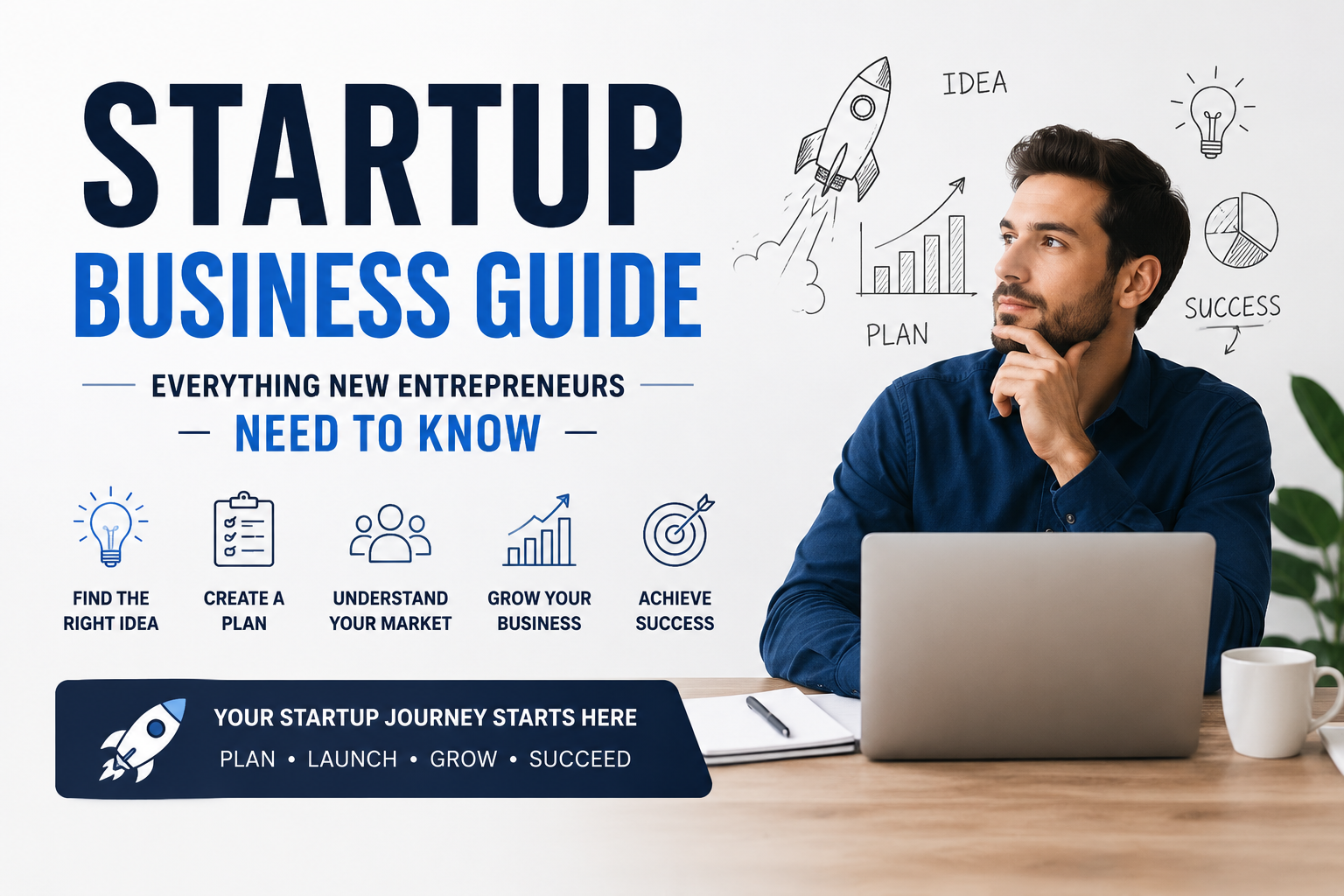
Starting a business is an exciting journey, but it can also feel overwhelming for first-time entrepreneurs. Many people have great ideas but are unsure how to turn them into successful businesses. The good news is that with the right planning, knowledge, and dedication, anyone can start and grow a business.
This startup business guide covers the essential steps every new entrepreneur should know before launching a business.
What Is a Startup Business?
A startup is a new business created to solve a problem, provide a service, or offer a product to customers. Unlike traditional businesses, startups often focus on innovation, rapid growth, and finding unique solutions to market needs.
Many successful companies today started as small startups with a simple idea and a strong vision.
Find the Right Business Idea
The foundation of every successful startup is a good business idea. Your idea should solve a problem, meet a customer need, or improve an existing product or service.
When choosing a business idea, ask yourself:
- What problems can I solve?
- What skills or knowledge do I have?
- Is there a market demand for the idea?
- Can the business make a profit?
Research your target audience and competitors to understand whether your idea has potential in the market.
Create a Business Plan
A business plan is a roadmap for your startup. It helps you stay organized and provides direction as your business grows.
A simple business plan should include:
Business Overview
Describe your business, products, or services.
Target Market
Identify your ideal customers and understand their needs.
Competitor Analysis
Study businesses that offer similar products or services.
Marketing Strategy
Explain how you will attract and retain customers.
Financial Plan
Estimate your startup costs, expected income, and future expenses.
Having a business plan can also help if you need funding from investors or lenders.
Understand Your Target Audience
Knowing your customers is one of the most important parts of building a successful startup.
Learn about:
- Customer age groups
- Interests and preferences
- Buying habits
- Common problems they face
The more you understand your audience, the easier it becomes to create products and services they will love.
Choose the Right Business Structure
Before launching your startup, decide on a business structure. Common options include:
Sole Proprietorship
Owned and operated by one person.
Partnership
Owned by two or more people.
Limited Liability Company (LLC)
Offers personal liability protection and flexibility.
Corporation
Suitable for businesses planning significant growth and investment.
Choose the structure that best matches your goals and local legal requirements.
Build a Strong Brand
Your brand is how customers recognize and remember your business.
A strong brand includes:
- A professional business name
- A memorable logo
- Consistent colors and design
- Clear messaging
- A unique value proposition
Building trust through branding can help your startup stand out in a competitive market.
Create an Online Presence
Today, every startup needs an online presence.
Start by creating:
A Professional Website
Your website should clearly explain your products, services, and contact information.
Social Media Profiles
Platforms like LinkedIn, Facebook, Instagram, and X can help you connect with customers and promote your brand.
Business Listings
Register your business on online directories and local listings to improve visibility.
An online presence helps customers find and trust your business.
Develop a Marketing Strategy
Even the best products need effective marketing to succeed.
Some marketing methods include:
- Search Engine Optimization (SEO)
- Content marketing
- Social media marketing
- Email marketing
- Paid advertising
- Influencer partnerships
Focus on marketing channels that reach your target audience most effectively.
Manage Your Finances Carefully
Financial management is essential for startup success.
Keep track of:
- Startup expenses
- Revenue
- Profit margins
- Taxes
- Cash flow
Use accounting software or hire a professional accountant if needed. Good financial planning helps prevent unexpected problems and supports long-term growth.
Stay Flexible and Keep Learning
The business world changes constantly. Successful entrepreneurs stay flexible and adapt to new trends, customer needs, and market conditions.
Continue learning through:
- Business books
- Online courses
- Industry events
- Networking opportunities
- Mentorship programs
The more knowledge you gain, the better decisions you can make for your startup.
Common Mistakes New Entrepreneurs Should Avoid
Many startups fail because of avoidable mistakes.
Some common mistakes include:
- Skipping market research
- Ignoring customer feedback
- Poor financial management
- Trying to grow too quickly
- Lack of planning
- Inconsistent marketing
Learning from these mistakes can increase your chances of long-term success.
Conclusion
Starting a business can be challenging, but it also offers exciting opportunities for growth and achievement. By choosing the right business idea, creating a solid business plan, understanding your audience, building a strong brand, and managing your finances wisely, you can lay the foundation for a successful startup.
Every successful entrepreneur started somewhere. With patience, dedication, and continuous learning, your startup can grow into a thriving business.
Frequently Asked Questions (FAQs)
1. What is a startup business?
A startup business is a newly established company designed to offer a product or service, often with a focus on innovation and growth.
2. How much money do I need to start a startup?
The amount varies depending on the industry and business model. Some online businesses can start with a small budget, while others may require significant investment.
3. Do I need a business plan for a startup?
Yes. A business plan helps define goals, organize strategies, manage finances, and attract investors if needed.
4. How can I attract customers to my startup?
You can attract customers through SEO, social media marketing, content marketing, email campaigns, and paid advertising.
5. What is the most important skill for an entrepreneur?
Problem-solving, leadership, communication, adaptability, and decision-making are among the most important skills for successful entrepreneurs.
