



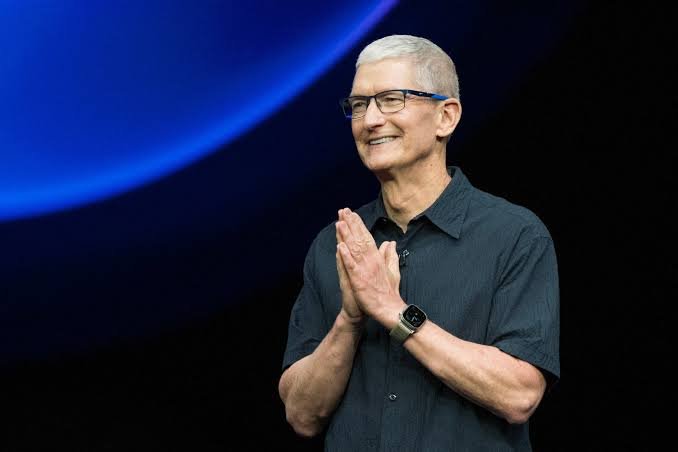
Before publishing, the article should distinguish Tim Cook’s confirmed achievements from any claims about a leadership transition. The content below focuses on his leadership legacy, Apple’s business transformation, and the changes associated with his tenure.
Introduction
Tim Cook’s leadership at Apple marked one of the most important chapters in the company’s history. He became Apple’s CEO in 2011, following Steve Jobs, and led the company through major changes in technology, business, services, and global expansion.
On September 1, 2026, John Ternus became Apple’s CEO, while Tim Cook moved into the role of executive chairman. This transition formally ended Cook’s 15-year period as chief executive, although he remains involved in the company.
Cook’s legacy is not limited to the iPhone or Mac. His tenure included the growth of Apple Services, the introduction of products such as Apple Watch and AirPods, the move to Apple-designed chips, and a stronger focus on privacy and environmental goals.
Who Is Tim Cook?
Tim Cook is an American business executive who joined Apple in 1998. Before becoming CEO, he served as the company’s chief operating officer and managed important parts of its worldwide supply chain and operations.
In August 2011, Cook became Apple’s CEO. His leadership style differed from Steve Jobs’ public image. Cook focused strongly on operations, business expansion, supply chain management, and the development of Apple’s growing product and services ecosystem.
His time as CEO came during a period when Apple grew from a major technology company into a global business with a large installed base of devices and a wider range of services.
1. Apple’s Business Grew Significantly
One of the clearest changes during Tim Cook’s leadership was Apple’s financial and business expansion.
According to Apple’s April 2026 announcement, the company’s annual revenue increased from approximately $108 billion in fiscal year 2011 to more than $416 billion in fiscal year 2025. Apple also reported that its market capitalization grew from approximately $350 billion to $4 trillion during Cook’s tenure.
This growth was supported by several areas, including iPhone sales, an expanding international presence, and the development of new services and product categories.
Key takeaway: Tim Cook’s Apple era was associated with substantial growth in the company’s revenue, valuation, and global reach.
2. Apple Services Became a Major Business
During Cook’s tenure, Apple expanded its business beyond hardware. Services became an important part of its overall strategy.
Apple’s services ecosystem includes products such as:
- iCloud
- Apple Music
- Apple TV
- Apple Pay
- App Store services
Apple states that its Services business grew to more than $100 billion during Cook’s leadership. This reflects the company’s effort to build recurring revenue around its devices and digital ecosystem.
Services also helped Apple offer customers additional features after they purchased an iPhone, iPad, Mac, or other Apple product.
3. New Products Expanded Apple’s Ecosystem
Tim Cook’s leadership saw Apple enter or expand several product categories.
Apple introduced and developed products including the Apple Watch, AirPods, and Apple Vision Pro during his tenure. These products extended Apple’s ecosystem into wearable technology, audio, and spatial computing.
The Apple Watch, for example, connected Apple’s hardware and software ecosystem with fitness and health-related features. AirPods helped Apple expand its presence in the wireless audio market.
These product categories became part of Apple’s broader strategy to offer multiple devices that work together.
4. Apple Designed Its Own Silicon
Another important change during Cook’s leadership was Apple’s move toward its own chip designs.
Apple transitioned to Apple-designed silicon, which gave the company greater control over important hardware technologies. Apple has linked this transition to improvements in performance and power efficiency across its products.
The Apple silicon strategy became particularly important for the Mac lineup. By controlling more of the chip technology, Apple could coordinate hardware and software development more closely.
This approach reflects a broader trend in the technology industry: companies seeking greater control over their core technologies.
5. Privacy and Environmental Responsibility
Privacy became a central part of Apple’s public identity during Tim Cook’s leadership.
Apple describes privacy as a fundamental human right and has emphasized user protection and security in its products. Cook also made environmental initiatives an important part of the company’s values.
Apple reports that it reduced its carbon footprint by more than 60% compared with 2015 levels, during a period when the company’s revenue nearly doubled.
These initiatives show how Apple positioned privacy, accessibility, and environmental responsibility as parts of its business and product development discussions.
6. Global Expansion and Supply Chain Management
Tim Cook brought significant experience in operations and supply chain management to his role as CEO. His earlier work at Apple included responsibility for worldwide operations.
During his tenure, Apple expanded its global footprint to more than 200 countries and territories. The company also reported an active installed base of more than 2.5 billion devices.
Global expansion helped Apple reach customers across different markets. At the same time, its international supply chain remained an important part of the company’s business operations.
Managing manufacturing, logistics, and product availability became increasingly important as Apple expanded its product range and customer base.
7. Challenges During the Tim Cook Era
Cook’s leadership also included challenges and criticism.
Some technology analysts and industry observers have questioned Apple’s pace of innovation in areas such as artificial intelligence and new product categories. Reuters reported that Apple faced criticism over its AI progress, the canceled electric vehicle project, and the performance of the Vision Pro headset.
These issues illustrate that Apple’s growth did not remove the challenges associated with maintaining innovation in a competitive technology market.
It is important to distinguish documented company developments from opinions about whether Apple’s product strategy was successful. Different analysts may assess the same business decisions differently.
8. The End of Tim Cook’s CEO Era
Apple announced in April 2026 that John Ternus would become CEO on September 1, 2026, while Tim Cook would become executive chairman.
Ternus previously served as Apple’s senior vice president of Hardware Engineering. Apple described the change as the result of a long-term succession planning process.
Cook’s move to executive chairman represents a change in his day-to-day leadership role, rather than a complete departure from Apple. According to Apple’s announcement, he would continue assisting with certain company matters, including engagement with policymakers.
Conclusion
Tim Cook’s 15 years as Apple’s CEO were defined by business growth, global expansion, services development, new product categories, and changes in Apple’s technology strategy.
His tenure included the growth of Apple Services, the expansion of wearable products, the transition to Apple-designed silicon, and a continued emphasis on privacy and environmental responsibility.
As John Ternus begins his role as CEO, Cook’s legacy provides important context for understanding Apple’s development from 2011 through 2026. The company’s next chapter will build on the systems, products, and business structure developed during Cook’s leadership.


