

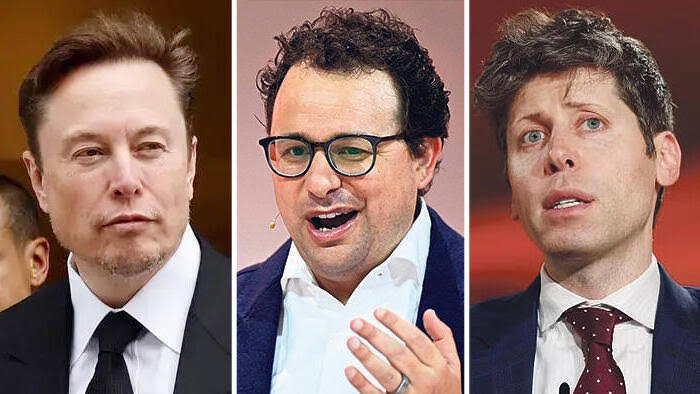
Artificial intelligence (AI) is developing faster than ever. Technology companies are investing billions of dollars in AI models, advanced chips, and powerful data centers. While many companies are competing to build smarter AI systems, some technology leaders are asking an important question: Are we moving too fast?
One of Silicon Valley’s AI CEOs believes that slowing down the race could be necessary to make artificial intelligence safer and more beneficial for society. This debate highlights a growing concern in the technology industry: how can companies continue innovating while managing the risks of increasingly powerful AI?
Why Is There a Push to Slow Down the AI Race?
The AI race is driven by competition. Companies want to develop more capable AI models, attract customers, secure investment, and gain an advantage over their competitors.
New AI tools can write content, generate images, analyze data, assist with software development, and answer complex questions. As these systems improve, businesses are finding more ways to use them.
However, rapid development also creates challenges. Companies may feel pressure to release products quickly before competitors introduce similar technology. This can make it difficult to test every possible risk before a product reaches the public.
Some AI leaders argue that responsible development should receive as much attention as speed. Their concern is not necessarily that AI development should stop completely, but that important safety checks should not be ignored in the pursuit of market leadership.
The Growing Concerns About AI Safety
AI safety has become a major topic among researchers, business leaders, and policymakers. As AI systems become more capable, experts are examining how they might be misused or produce unexpected results.
One concern is misinformation. AI tools can generate convincing text, images, audio, and video. Although these capabilities have many positive applications, they can also make it easier to create misleading information.
Another concern is cybersecurity. AI can help security professionals identify weaknesses and defend computer systems. At the same time, malicious users may attempt to use similar tools to develop scams or automate harmful activities.
Privacy is another important issue. AI systems may process large amounts of information, making responsible data collection, storage, and use essential.
There are also concerns about employment. AI can automate certain tasks, which may change the way people work. While new opportunities may emerge, some workers could need additional training to adapt.
These risks do not mean that AI technology is inherently harmful. They show why careful testing, monitoring, and clear accountability matter.
Why AI Companies Feel Pressure to Move Faster
The business environment makes slowing down difficult. Companies that develop successful AI products can attract customers, investors, and talented employees.
The competition also involves access to computing power. Training advanced AI models requires specialized chips, large data centers, electricity, and significant financial resources.
Companies are investing heavily because they expect AI to transform industries such as healthcare, finance, education, manufacturing, and entertainment.
If one company delays a product to conduct additional safety testing, a competitor may release a similar product first. This creates a difficult situation for business leaders who want to prioritize safety without losing their competitive position.
For this reason, some experts believe that individual companies cannot solve every AI safety challenge independently. Industry-wide standards, shared research, and effective regulation may help create a more balanced approach.
Can Slowing Down AI Development Help?
Slowing down certain parts of AI development could provide more time for researchers to evaluate risks, improve security, and understand how advanced systems behave.
For example, companies could conduct stronger safety tests before launching powerful AI models. Independent experts could examine potential weaknesses, while developers could introduce safeguards against misuse.
Governments and regulators could also establish clear rules for high-risk AI applications. Such rules may help companies understand their responsibilities and encourage consistent standards across the industry.
However, slowing down does not automatically guarantee safety. Risks can remain even when development takes longer, and overly broad restrictions could delay useful innovations.
AI can support medical research, improve accessibility, assist teachers, and help businesses work more efficiently. The goal should therefore be to manage risks without unnecessarily blocking beneficial applications.
A practical approach is to match the level of testing and oversight to the potential impact of an AI system.
The Role of AI CEOs in Responsible Innovation
AI company leaders have significant influence over how their technology is developed and released. Their decisions can affect millions of users, employees, businesses, and public institutions.
Responsible leadership involves more than building powerful models. It also requires investing in security, evaluating potential misuse, communicating limitations, and responding quickly when problems arise.
CEOs can encourage internal teams to report safety concerns without fear of punishment. They can also support independent evaluations and work with researchers, governments, and other technology companies.
At the same time, companies must explain what they mean when they call for slower development. A clear proposal should identify which activities need additional oversight, what risks are being addressed, and how progress will be measured.
Without practical details, calls to slow down may be difficult to distinguish from general statements about responsible innovation.
What Does This Debate Mean for the Future of AI?
The debate over AI development is likely to become more important as technology advances. Businesses want more capable tools, while governments and the public want systems that are secure, reliable, and accountable.
The future may involve a combination of innovation and stronger safeguards. Companies could continue improving AI while introducing more rigorous testing for systems that create significant risks.
Education will also play an important role. Workers, students, and business owners need to understand both the benefits and limitations of AI tools.
For consumers, transparency matters. People should know when they are interacting with AI, understand that its answers can contain errors, and have ways to report harmful or misleading outputs.
The central question is not simply whether AI should move faster or slower. It is whether the industry can develop powerful technology while maintaining public trust.
Conclusion
Why would one of Silicon Valley’s AI CEOs want the race to slow down? The answer lies in the tension between rapid innovation and responsible development.
AI has enormous potential to improve productivity, support research, and solve complex problems. However, speed alone should not determine success. Safety testing, privacy protection, cybersecurity, and accountability must remain important as AI systems become more capable.
The most successful AI companies may ultimately be those that balance innovation with trust. Moving carefully where the risks are greatest could help the industry build technology that benefits businesses and society over the long term.
