



The wellness consumer of 2026 is asking different questions than the wellness consumer of a decade ago.
Performance still matters. Convenience still matters. But increasingly, people want to know how the products they use every day fit into the broader environments they inhabit. They are reading ingredient labels, researching materials, evaluating supply chains, and, in growing numbers, examining the role electromagnetic exposure may play in modern life.
That shift has created a new conversation at the intersection of technology and personal well-being, one that extends beyond what a device does and into how it is designed. For companies operating in the wellness sector, environmental considerations are no longer peripheral. They are becoming part of the value proposition itself.
The Light System is among the brands embracing that evolution.
Rather than treating EMF awareness as a reaction to changing consumer sentiment, the company has built much of its product philosophy around intentional design choices aimed at minimizing electromagnetic exposure while preserving functionality and user experience. Across wearable technology, immersive wellness environments, and home-based systems, the company has positioned environmental wellness as a central component of innovation.
The approach arrives at a time when connected devices are more integrated into daily life than ever before. Smartwatches monitor sleep cycles. Wireless headphones remain in use for hours at a time. Home assistants, tablets, and fitness trackers have transformed convenience into a constant state of connectivity.
For many consumers, that convenience is welcome. For others, it has sparked a deeper interest in understanding how technology interacts with the spaces they occupy and the routines they maintain.
As a result, a new category of consumer has emerged: one that seeks technological advancement without abandoning intentional living.
The Light System’s recently introduced WATCH reflects that mindset.
Wearables have become one of the defining products of the modern health movement, delivering biometric data, activity tracking, notifications, and personalized insights directly from the wrist. Yet concerns about continuous Bluetooth connectivity and long-term device use have also become part of public discussion among health-conscious consumers.
According to the company, its WATCH was developed with those conversations in mind. The device incorporates proprietary technology intended to harmonize the body’s biofield, while users who prefer to eliminate wireless communication altogether have the option to disable Bluetooth functionality entirely.
That flexibility speaks to a broader principle increasingly valued by consumers: choice.
Rather than forcing users into a permanently connected ecosystem, manufacturers are beginning to recognize that personalization extends beyond software settings and user interfaces. It also includes how, when, and to what degree individuals engage with wireless technology in their everyday lives.
The philosophy extends well beyond a single product launch.
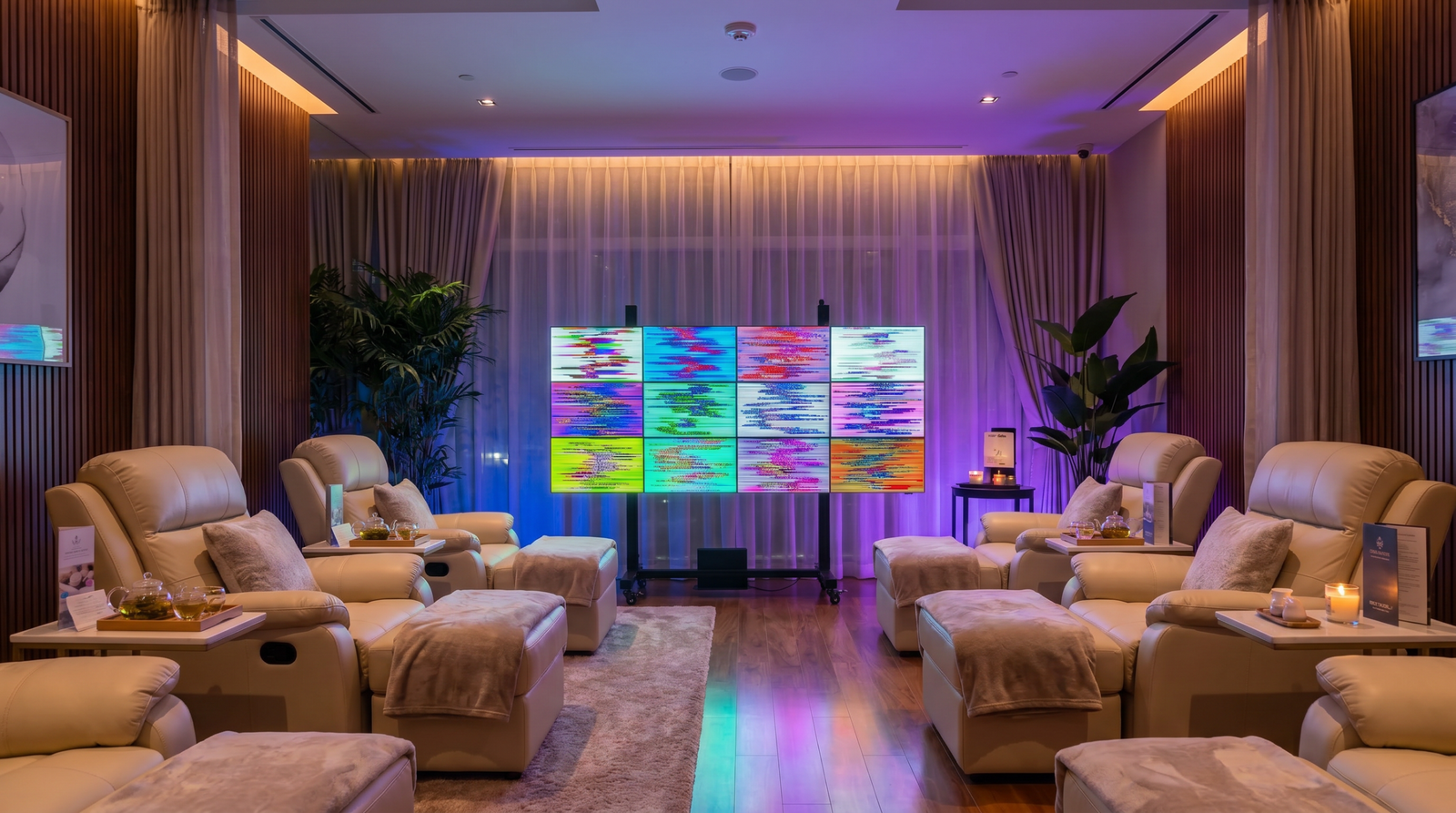
The Light System says its commitment to low-EMF design informs its entire ecosystem, from portable devices and residential offerings to commercial installations and its flagship wellness chair. These systems combine light-based experiences, proprietary programming, and immersive sensory environments intended to support relaxation and overall well-being while maintaining what the company describes as minimal electromagnetic output.
That emphasis on environment may prove particularly significant as wellness itself continues to evolve.
The industry has spent years focusing on optimization. Better sleep metrics. Better workout data. Better nutritional tracking. But a growing number of consumers are shifting attention toward the settings in which those experiences occur. The atmosphere of a room, the quality of light, the presence of wireless technologies, and the intentionality behind product design have become part of a more holistic understanding of wellness.
In that context, environmental wellness is emerging as something larger than a trend.
It represents a reframing of the relationship between people and technology.
Instead of asking consumers to disconnect entirely, companies like The Light System are exploring what more mindful connectivity might look like. The goal is not necessarily less innovation, but innovation that acknowledges how modern environments influence comfort, confidence, and personal well-being.
The company’s work in clinical and community settings further illustrates that perspective. Its flagship wellness chair has been introduced into wellness centers, recovery-focused programs, and clinics seeking non-invasive tools that complement broader approaches to relaxation and support. More recently, The Light System Chair was donated to a veteran wellness initiative at Atlas Clinics in Pompano Beach, expanding access to the technology for veterans participating in individualized care programs.
Those efforts reflect a larger movement occurring throughout the wellness marketplace. Consumers increasingly expect companies to think proactively about design considerations that once received little public attention. Questions surrounding materials, sustainability, wireless connectivity, and environmental impact now influence purchasing decisions across multiple industries.
Technology companies that recognize those priorities may find themselves better positioned for the years ahead.
For The Light System, the growing public conversation surrounding EMFs appears to reinforce a philosophy already embedded within its development process. The company’s products are designed not only to perform specific functions, but to contribute to environments that align with a broader vision of intentional living.
As the boundaries between wellness, technology, and environmental awareness continue to blur, one reality is becoming increasingly clear: consumers are no longer evaluating products in isolation. They are evaluating the ecosystems those products create.
And in that evolving landscape, thoughtful design may prove to be every bit as important as innovation itself.


