



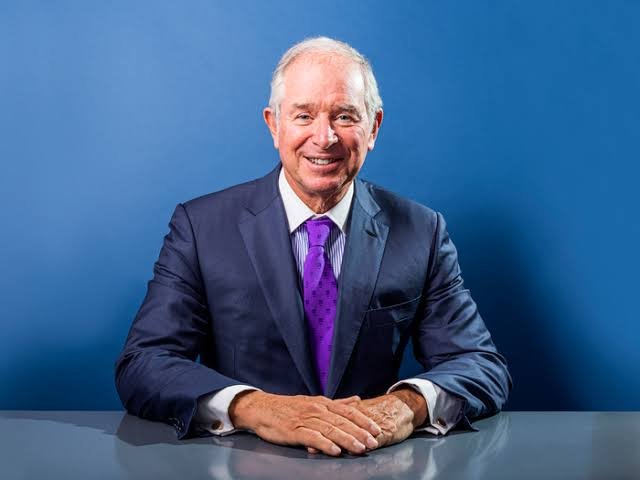
Stephen A. Schwarzman is one of the most influential figures in the global investment industry. As the Chairman, CEO, and Co-Founder of Blackstone, he has helped build the company from a small investment business into one of the world’s largest alternative asset managers. Blackstone says it had more than $1.3 trillion in assets under management as of June 30, 2026.
But how did Schwarzman build such a large business empire? His story is built around long-term thinking, disciplined investing, strong relationships, and a focus on finding opportunities before they become obvious.
Who Is Stephen A. Schwarzman?
Stephen A. Schwarzman is an American businessman, investor, and philanthropist. He co-founded Blackstone in 1985 with Peter G. Peterson. Schwarzman has been involved in the firm’s development since its beginning and continues to serve as its Chairman and CEO.
Before founding Blackstone, Schwarzman built his career in investment banking. His experience in finance helped him understand how large companies, investors, and financial markets work.
His career eventually led him to create a company focused on investing in businesses and assets with long-term growth potential.
How Blackstone Started
Blackstone was founded in 1985 at a time when private investment firms were very different from the huge global platforms they are today.
Schwarzman and Peterson started the firm with a focus on investment and financial advisory work. Over time, Blackstone expanded into private equity, real estate, credit, hedge fund solutions, infrastructure, and other investment areas.
The firm’s growth shows one of Schwarzman’s most important business ideas: build for the long term rather than chase short-term success.
How Stephen Schwarzman Built Blackstone
1. He Focused on Long-Term Opportunities
One of Schwarzman’s most important principles is long-term thinking.
Instead of focusing only on what could happen next month or next year, Blackstone looks for businesses, industries, and assets that can create value over many years.
This approach has helped the firm build businesses across different markets and investment categories.
2. He Built a Diversified Investment Platform
Blackstone is no longer simply a private equity company.
Today, its businesses cover areas such as private equity, real estate, credit, infrastructure, life sciences, and multi-asset investing. Blackstone says its platform includes more than 270 portfolio companies and approximately 13,000 real estate assets, based on figures cited by the firm.
This diversification has been an important part of the company’s growth.
If one investment area faces difficult conditions, other parts of the business may provide opportunities.
3. He Invested in People
Schwarzman has repeatedly emphasized the importance of talent.
Blackstone describes its people as one of its most valuable assets and says that its success depends heavily on talented teams working together around a shared mission.
For Schwarzman, building a powerful company is not only about raising money. It is also about finding talented people who can make good decisions.
4. He Built Strong Investor Relationships
Investment firms depend heavily on trust.
Blackstone’s business involves managing capital for institutional and individual investors. The company says that alignment with clients and long-term partnerships are central to its investment philosophy.
Schwarzman’s leadership has therefore focused not only on investment performance but also on building long-lasting relationships with investors.
5. He Expanded Into New Markets
Blackstone continued expanding beyond its original businesses.
The company now invests across several major areas of the economy, including real estate, private equity, credit, infrastructure, and life sciences.
This expansion helped transform Blackstone into a global investment platform instead of a company dependent on a single type of investment.
Stephen Schwarzman’s Leadership Style
Schwarzman’s leadership style can be described as ambitious, analytical, and focused on excellence.
Blackstone’s stated values include pursuing excellence, maintaining integrity, encouraging innovation, serving clients, and working as a team.
One important lesson from his career is that successful leadership often requires making decisions with a long-term view.
Markets change. Economic cycles change. Investment opportunities change. A strong organization needs a strategy that can survive those changes.
Why Blackstone Became a Global Business Empire
Blackstone’s growth cannot be explained by one investment or one business decision.
Its success has come from combining several factors:
- A strong investment culture
- Global expansion
- Multiple investment strategies
- Experienced professionals
- Long-term investor relationships
- Focus on large market opportunities
- Strong risk management
- Continuous business expansion
The company has also developed expertise across different asset classes, allowing its teams to share knowledge and identify opportunities across markets.
What Entrepreneurs Can Learn From Stephen Schwarzman
Schwarzman’s career offers several useful lessons for entrepreneurs and business leaders.
Think long term: Building a large company takes time.
Hire talented people: A leader cannot build a global organization alone.
Keep learning: Financial markets and industries constantly change.
Build trust: Strong relationships can become a major business advantage.
Look for opportunities: Large businesses often grow by entering new markets at the right time.
Stay disciplined: Growth without proper risk management can create serious problems.
Stephen Schwarzman’s Legacy
Stephen A. Schwarzman’s biggest achievement is not simply becoming a successful investor. His larger achievement is helping build an institution that has expanded far beyond its original business model.
From its founding in 1985, Blackstone has developed into a global alternative investment manager with more than $1.3 trillion in assets under management as of June 30, 2026.
Schwarzman’s career demonstrates how a clear vision, talented teams, strong relationships, and long-term thinking can transform a small financial business into a global institution.
His story is therefore not only about money or investing. It is also a story about building an organization that can continue to grow across generations and changing economic cycles.


