

Artificial intelligence is advancing at a remarkable speed. New AI models are becoming larger, faster, and more capable, but their growth is creating a major hardware challenge: memory.
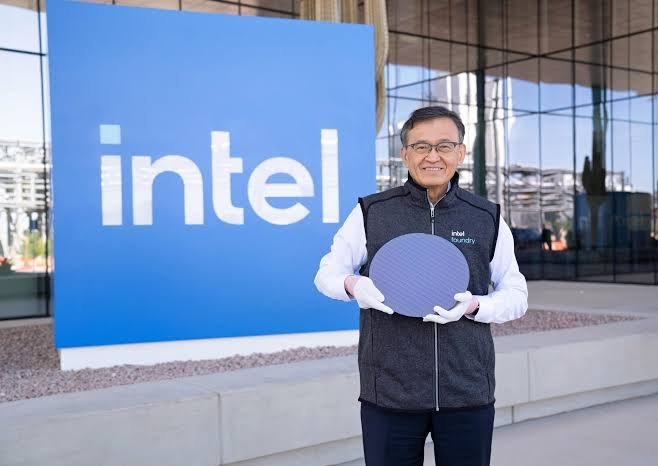
Intel CEO Lip-Bu Tan has highlighted the importance of memory and computing infrastructure as AI workloads continue to expand. As AI systems process larger amounts of data and use increasingly complex models, having enough fast and efficient memory is becoming just as important as having powerful processors.
But what exactly is the AI memory bottleneck, and why could it become one of the biggest challenges for the technology industry?
What Is the AI Memory Bottleneck?
The AI memory bottleneck refers to a situation where an AI system has enough computing power but cannot move or access data quickly enough.
AI processors, including GPUs and other accelerators, perform billions or even trillions of calculations. However, these processors constantly need data from memory. If the data cannot reach the processor quickly enough, the processor may spend time waiting instead of calculating.
In simple words, AI needs both computing power and fast memory to work efficiently.
This problem becomes more serious as AI models grow larger.
Why Does AI Need So Much Memory?
Modern AI models can contain billions or even trillions of parameters. These parameters help models understand language, images, code, audio, and other types of information.
During AI training and inference, systems need to store and access:
- Model parameters
- Training data
- Intermediate calculations
- Activations
- Context information
- AI-generated results
As these workloads grow, memory requirements increase as well.
For example, generative AI applications may need to process long conversations, large documents, high-resolution images, videos, or complex software code. All of this creates additional demand for memory bandwidth and capacity.
Lip-Bu Tan’s View of the AI Hardware Challenge
Lip-Bu Tan has spent much of his career focused on the semiconductor and technology industries. As CEO of Intel, his role puts him at the center of the competition surrounding AI chips, computing infrastructure, and advanced semiconductor technology.
The broader message behind the AI memory discussion is simple: building better AI is not only about making processors faster.
The entire computing system needs to improve.
That includes processors, memory, networking, packaging, power efficiency, and manufacturing technology.
This is important because AI data centers increasingly combine thousands of processors and large amounts of memory. If one part of the system becomes a bottleneck, the performance of the whole system can suffer.
Memory Bandwidth vs. Memory Capacity
There are two important concepts when discussing AI memory: capacity and bandwidth.
Memory capacity refers to how much information memory can store at a given time.
Memory bandwidth refers to how quickly data can move between memory and the processor.
Both are important.
An AI system may have enough memory capacity but still perform poorly if its memory bandwidth is too low. Similarly, very high bandwidth is not enough if the system does not have sufficient capacity for a large AI model.
This is why advanced AI hardware increasingly depends on specialized high-bandwidth memory technologies.
Why High-Bandwidth Memory Matters
High-bandwidth memory, commonly known as HBM, is designed to provide extremely high data-transfer rates for demanding workloads.
AI accelerators use HBM because modern AI calculations require enormous amounts of data to move rapidly between memory and computing units.
As AI demand grows, the industry needs more advanced memory solutions with greater bandwidth, capacity, and energy efficiency.
This creates opportunities as well as challenges for semiconductor manufacturers.
The Cost of the AI Memory Problem
Memory is not simply a technical issue. It is also an economic issue.
AI data centers require huge investments in chips, servers, networking equipment, electricity, cooling, and memory.
If memory becomes scarce or expensive, the overall cost of building AI infrastructure can increase.
This could affect companies developing large AI models as well as businesses trying to deploy AI applications.
For this reason, memory supply has become an important part of the AI hardware race.
Why Intel Is Paying Attention
Intel has traditionally been known for its CPUs, but the AI era is changing the semiconductor market.
Companies now need complete computing platforms capable of handling AI workloads efficiently.
Intel’s challenge is to compete across a rapidly changing ecosystem that includes CPUs, AI accelerators, networking, software, advanced packaging, and manufacturing.
Under Lip-Bu Tan, the company has an opportunity to focus on the broader infrastructure required to support AI growth.
The memory challenge is therefore connected to a much bigger question: What will the computing architecture of the AI era look like?
Will Memory Become the Biggest AI Challenge?
Memory is unlikely to be the only major challenge facing AI.
The industry also has to deal with:
- Rising electricity consumption
- Data-center capacity
- Chip manufacturing constraints
- Advanced packaging
- Cooling requirements
- Semiconductor supply chains
- AI software efficiency
- Increasing infrastructure costs
However, memory is becoming increasingly important because every AI workload depends on moving data efficiently.
If computing power increases much faster than memory performance, the gap can limit the benefits of faster processors.
What Could Happen Next?
The AI industry is likely to continue investing in faster and more efficient memory technologies.
Future AI systems could combine advanced processors with larger memory pools, faster interconnects, improved packaging, and more efficient software.
AI developers may also look for ways to reduce memory requirements through model optimization, quantization, compression, and more efficient architectures.
The goal is not simply to build bigger AI models. The goal is to build AI systems that can deliver more performance while using resources efficiently.
Conclusion
The AI revolution is often described as a race for faster processors, but the real challenge is much broader. AI systems need a complete infrastructure capable of moving, storing, and processing enormous amounts of data.
Lip-Bu Tan’s focus on the AI hardware ecosystem highlights an important reality: the future of AI depends not only on better chips but also on better memory and connectivity.
As AI models continue to grow, memory could become one of the most important factors determining how fast, affordable, and efficient future AI systems can become. For chipmakers, cloud companies, and AI developers, solving the memory bottleneck may be essential to unlocking the next stage of artificial intelligence.
