



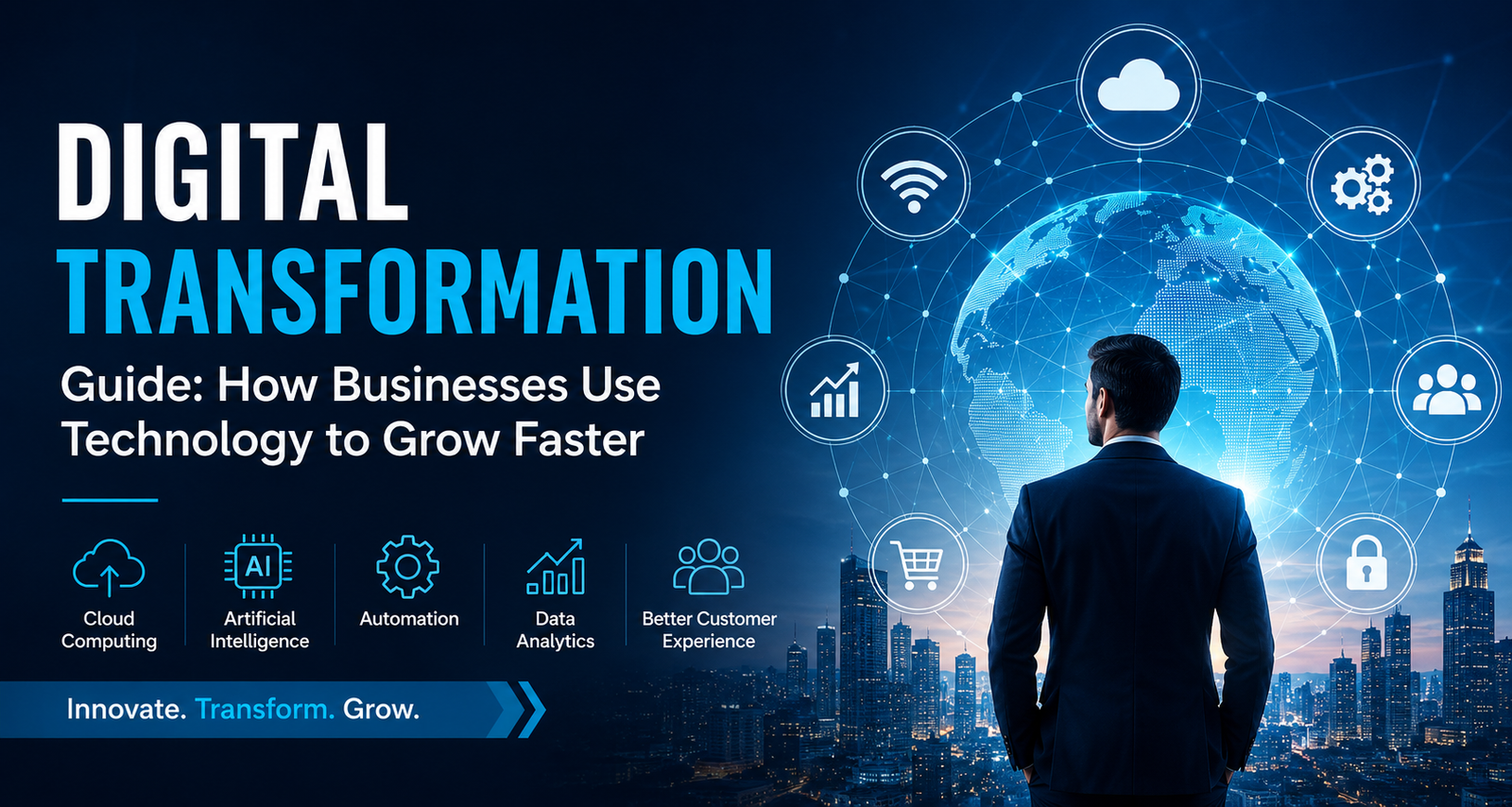
In today’s fast-changing world, technology is helping businesses work smarter, serve customers better, and grow faster. Companies of all sizes are using digital tools to improve their operations and stay competitive. This process is known as digital transformation.
Digital transformation is not just about using computers or software. It is about changing the way a business operates by using technology to improve efficiency, productivity, and customer experience. In this guide, we will explain digital transformation in simple language and show how businesses use technology to achieve success.
What Is Digital Transformation?
Digital transformation is the process of using digital technologies to improve business processes, products, services, and customer experiences.
It involves replacing manual methods with digital solutions that help businesses save time, reduce costs, and make better decisions.
For example:
- Using cloud storage instead of paper files
- Managing customer information through CRM software
- Selling products online through eCommerce websites
- Automating repetitive tasks with software tools
Digital transformation helps businesses become more efficient and adaptable in a digital world.
Why Is Digital Transformation Important?
Technology is changing customer expectations and market trends. Businesses that fail to adopt digital tools may struggle to compete.
Here are some key benefits of digital transformation:
Improved Efficiency
Digital tools automate repetitive tasks, reducing manual work and increasing productivity.
Better Customer Experience
Businesses can provide faster support, personalized services, and easier online interactions.
Increased Revenue
Technology helps businesses reach more customers and improve sales performance.
Data-Driven Decisions
Businesses can analyze data to understand customer behavior and make smarter decisions.
Competitive Advantage
Companies that embrace technology can stay ahead of competitors and adapt to market changes.
Key Technologies Driving Digital Transformation
Cloud Computing
Cloud computing allows businesses to store data and access software over the internet.
Benefits include:
- Lower IT costs
- Easy access from anywhere
- Improved data security
- Better collaboration among teams
Popular cloud solutions help businesses scale quickly without investing heavily in hardware.
Artificial Intelligence (AI)
AI is transforming how businesses operate by automating tasks and analyzing large amounts of data.
Businesses use AI for:
- Customer support chatbots
- Predictive analytics
- Personalized marketing
- Fraud detection
- Process automation
AI helps companies improve efficiency and deliver better customer experiences.
Customer Relationship Management (CRM)
CRM software helps businesses manage customer interactions and sales processes.
Benefits include:
- Better customer communication
- Improved lead management
- Higher customer satisfaction
- Increased sales opportunities
A CRM system keeps all customer information organized in one place.
Automation Tools
Automation reduces manual work by handling repetitive tasks automatically.
Examples include:
- Email marketing automation
- Invoice generation
- Inventory management
- Appointment scheduling
Automation saves time and allows employees to focus on more important work.
Data Analytics
Data analytics helps businesses understand trends, customer preferences, and performance metrics.
Benefits include:
- Better decision-making
- Improved marketing campaigns
- Enhanced customer insights
- Increased business growth
Businesses that use data effectively can make more informed strategic decisions.
How Digital Transformation Helps Businesses Grow Faster
Faster Business Operations
Technology streamlines workflows and reduces delays. Employees can complete tasks more quickly and efficiently.
Better Customer Engagement
Digital channels such as websites, mobile apps, and social media help businesses connect with customers more effectively.
Improved Productivity
Employees can collaborate using cloud-based tools and communication platforms, improving teamwork and efficiency.
Enhanced Innovation
Technology encourages businesses to develop new products, services, and business models that meet changing customer needs.
Scalability
Digital systems make it easier for businesses to expand without significantly increasing operational costs.
Steps to Start Digital Transformation
Assess Current Processes
Identify areas where technology can improve efficiency and performance.
Set Clear Goals
Define what you want to achieve through digital transformation, such as increasing sales or improving customer service.
Choose the Right Technology
Select tools and platforms that match your business needs and budget.
Train Employees
Provide proper training so employees can effectively use new technologies.
Monitor and Improve
Track results and continuously optimize digital processes for better outcomes.
Common Challenges in Digital Transformation
While digital transformation offers many benefits, businesses may face some challenges:
- Resistance to change
- Limited budgets
- Lack of technical expertise
- Data security concerns
- Integration issues with existing systems
Proper planning and employee involvement can help overcome these challenges successfully.
The Future of Digital Transformation
Digital transformation will continue to shape the future of business. Technologies such as Artificial Intelligence, Machine Learning, Internet of Things (IoT), Blockchain, and Cloud Computing will become even more important.
Businesses that invest in technology today will be better prepared for future opportunities and challenges. Digital transformation is no longer optional—it is essential for long-term growth and success.
Conclusion
Digital transformation helps businesses improve efficiency, enhance customer experiences, and accelerate growth. By adopting technologies such as cloud computing, AI, automation, CRM systems, and data analytics, companies can stay competitive in an increasingly digital world.
Whether you run a small business or a large enterprise, embracing digital transformation can help you work smarter, serve customers better, and achieve sustainable growth in the modern business landscape.
Frequently Asked Questions (FAQs)
1. What is digital transformation in business?
Digital transformation is the use of digital technologies to improve business operations, customer experiences, and overall performance.
2. Why is digital transformation important for businesses?
It helps businesses increase efficiency, reduce costs, improve customer satisfaction, and remain competitive in the market.
3. What technologies are commonly used in digital transformation?
Common technologies include cloud computing, Artificial Intelligence (AI), automation tools, CRM software, and data analytics platforms.
4. Can small businesses benefit from digital transformation?
Yes, small businesses can improve productivity, reach more customers, and grow faster by using affordable digital tools and solutions.
5. What is the first step in digital transformation?
The first step is assessing current business processes and identifying areas where technology can improve efficiency and performance.


