



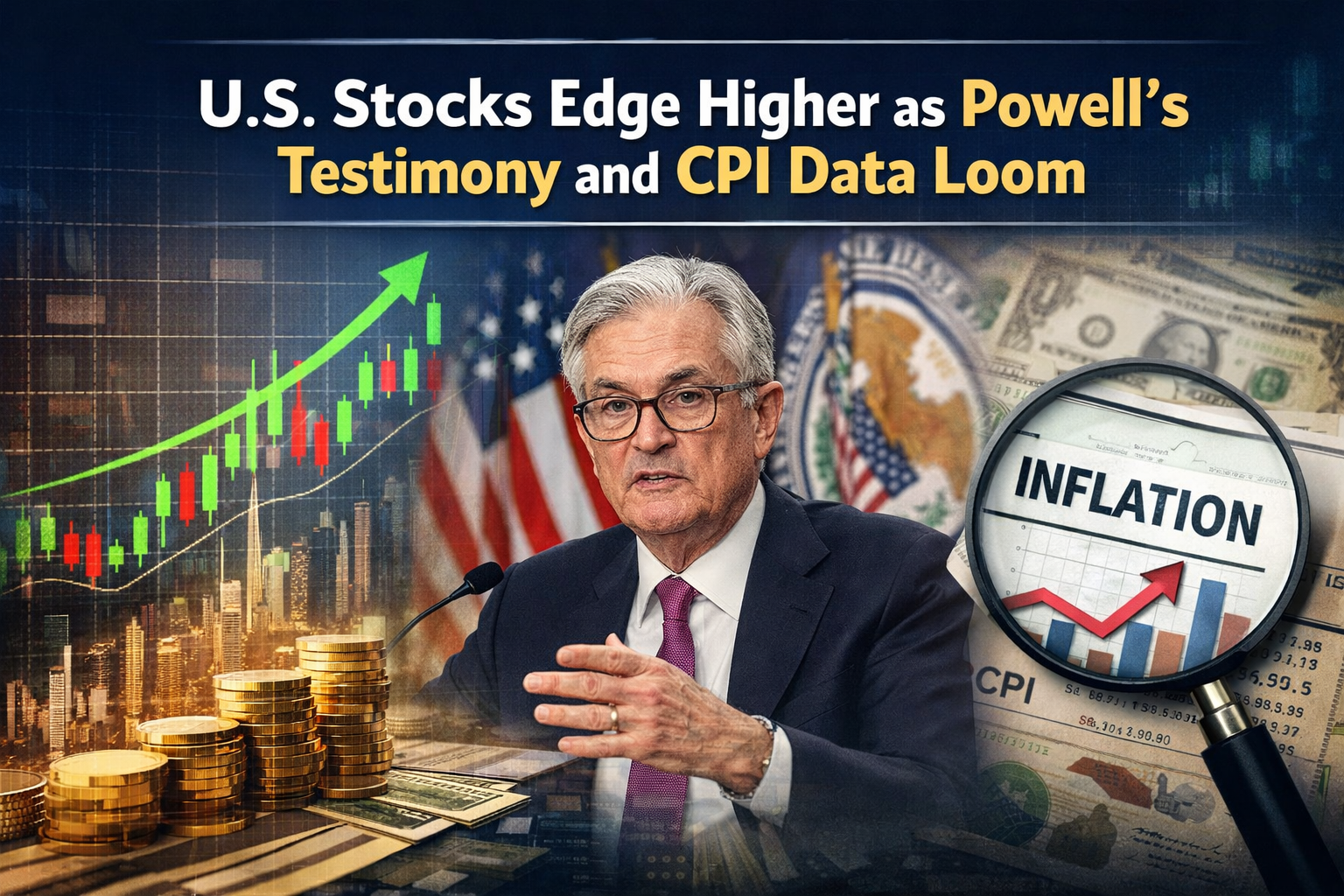
The U.S. stock market is showing cautious optimism as investors wait for two major economic events: Federal Reserve Chair Jerome Powell’s testimony and the release of the Consumer Price Index (CPI) inflation data. These two developments could significantly influence the direction of financial markets in the coming days.
Markets have recently experienced mixed movements as traders analyze economic signals and try to predict future interest rate decisions. When important economic data and central bank statements approach, investors often become more careful, which can lead to small gains or sideways movements in stock indexes.
In this article, we will explain why U.S. stocks are edging higher, what Powell’s testimony means for investors, and how CPI inflation data could affect the stock market.
Understanding the Current Market Situation
U.S. stock markets have been slowly moving upward as investors adopt a “wait and watch” strategy. Major indexes like the S&P 500, Nasdaq, and Dow Jones often react to economic news and policy signals.
When investors expect positive economic data or supportive monetary policies, markets tend to rise. However, uncertainty about inflation and interest rates can keep gains limited.
Recently, investors have been paying close attention to two key factors:
- Federal Reserve policy direction
- Inflation trends in the U.S. economy
Both of these elements play a major role in shaping market sentiment.
Why Powell’s Testimony Matters
The Chair of the Federal Reserve, Jerome Powell, regularly appears before Congress to discuss the economy and monetary policy. During these hearings, Powell provides insights into the central bank’s view on inflation, employment, and interest rates.
Markets carefully listen to every statement he makes because it can signal future policy decisions.
Key Reasons Powell’s Testimony Is Important
- Interest Rate Guidance
The Federal Reserve adjusts interest rates to control inflation and support economic growth. If Powell suggests that rates may stay high for longer, markets may react cautiously.
- Inflation Outlook
Investors want to know whether inflation is still a concern or if it is moving closer to the Fed’s target.
- Economic Growth Signals
Powell may also comment on economic strength, consumer spending, and employment trends.
A positive tone from Powell could boost investor confidence, while a more cautious outlook could lead to market volatility.
What Is CPI and Why It Matters
The Consumer Price Index (CPI) measures changes in the prices of goods and services purchased by consumers. It is one of the most important indicators used to track inflation.
When CPI rises significantly, it means the cost of living is increasing. This can lead the Federal Reserve to keep interest rates higher for longer to control inflation.
Components of CPI
CPI tracks price changes in several categories, including:
- Food and beverages
- Housing and rent
- Transportation
- Medical care
- Energy prices
- Education and communication
These categories reflect everyday spending by consumers.
How CPI Data Influences the Stock Market
Inflation data has a strong impact on financial markets.
1. High Inflation
If CPI comes in higher than expected:
- Investors may worry about further interest rate hikes
- Borrowing costs could increase
- Stock markets may become volatile
2. Lower Inflation
If CPI is lower than expected:
- Investors may expect interest rate cuts
- Economic conditions may appear more stable
- Stocks often move higher
Because of this, traders and analysts closely watch CPI reports.
Why U.S. Stocks Are Edging Higher
Despite uncertainty, stocks are showing small gains due to several reasons.
Strong Corporate Earnings
Many companies have recently reported solid earnings results, which supports stock prices.
Economic Resilience
The U.S. economy has remained relatively strong, with steady job growth and consumer spending.
Investor Optimism
Some investors believe inflation may gradually cool, allowing the Federal Reserve to reduce interest rates in the future.
These factors have helped the market maintain upward momentum.
Market Sectors Showing Strength
Certain sectors tend to perform better when investors feel optimistic about economic stability.
Technology Sector
Technology companies often benefit when interest rate expectations stabilize. Many investors continue to buy tech stocks due to innovation and long-term growth potential.
Financial Sector
Banks and financial institutions often react strongly to interest rate expectations. Changes in Fed policy can influence their profitability.
Consumer Discretionary
Companies that rely on consumer spending, such as retail and travel businesses, may benefit if inflation slows and consumers have more purchasing power.
Risks Investors Are Watching
Even though stocks are edging higher, several risks remain.
Persistent Inflation
If inflation remains high, the Federal Reserve may keep interest rates elevated for longer than expected.
Global Economic Concerns
International economic slowdowns or geopolitical tensions could affect investor sentiment.
Policy Uncertainty
Markets can become volatile if investors receive mixed signals from policymakers.
Because of these risks, many investors are maintaining cautious positions.
What Investors Should Watch This Week
Several key developments could move markets in the short term.
Powell’s Congressional Testimony
Investors will analyze Powell’s comments for clues about future interest rate decisions.
CPI Inflation Data
The CPI report will show whether inflation is improving or still a major concern.
Market Reactions
After the data and testimony are released, markets may react quickly based on expectations versus actual results.
Long-Term Outlook for the U.S. Stock Market
Despite short-term uncertainty, many analysts remain optimistic about the long-term outlook of the U.S. economy.
Several factors support this view:
- Strong innovation in technology and artificial intelligence
- Continued business investment
- Consumer resilience
- Stable financial systems
However, inflation and interest rate policies will continue to influence market movements in the near future.
Tips for Investors During Market Uncertainty
Periods of economic uncertainty require careful investment decisions.
Diversify Your Portfolio
Holding different types of assets can reduce risk during volatile market conditions.
Focus on Long-Term Goals
Short-term market movements should not distract from long-term investment strategies.
Monitor Economic Indicators
Important data such as inflation, employment reports, and central bank policies can provide useful insights.
Staying informed helps investors make smarter financial decisions.
Conclusion
U.S. stocks are gradually moving higher as investors wait for two crucial economic events: Jerome Powell’s testimony and the upcoming CPI inflation report. These developments will likely provide important signals about the future direction of interest rates and economic policy.
While the market remains cautious, optimism about economic resilience and corporate earnings continues to support stock prices. However, inflation data and Federal Reserve guidance will remain key factors shaping market movements in the weeks ahead.
Investors should stay alert to economic updates and maintain a balanced investment strategy during this period of uncertainty.
FAQs
1. Why are U.S. stocks edging higher right now?
Stocks are rising slightly because investors are optimistic about economic stability but are waiting for important data like CPI inflation and Powell’s testimony.
2. What is Jerome Powell’s testimony?
Jerome Powell, the Federal Reserve Chair, testifies before Congress to discuss the economy and monetary policy. His comments often influence financial markets.
3. What does CPI measure?
The Consumer Price Index (CPI) measures the average change in prices paid by consumers for goods and services, which helps track inflation.
4. How does inflation affect the stock market?
High inflation can lead to higher interest rates, which may slow economic growth and pressure stock prices.
5. What should investors do during market uncertainty?
Investors should stay diversified, monitor economic data, and focus on long-term investment goals rather than reacting to short-term market fluctuations.


